

Tom Duckham of Redspeed International, a passionate motorcyclist and road safety advocate, reflects on rural riding risks and shares practical insights to help riders enjoy summer journeys while staying safe.
Summer brings some of the very best days to be on two wheels. Long light evenings, dry roads and the lure of Britain’s most spectacular rural landscapes make it an irresistible season for motorcyclists.
I count myself firmly among them. There is nothing quite like riding through open countryside, the road unfolding ahead, fully engaged in the experience.
But those same roads carry a level of risk that demands respect. Rural routes account for a disproportionate number of serious and fatal collisions, and motorcyclists remain one of the most vulnerable groups. Many of the hazards we face are unpredictable and unforgiving: a tightening bend with poor camber, loose gravel dragged into the carriageway, agricultural vehicles emerging from concealed accesses or simply a momentary lapse in concentration. On rural roads, things go wrong quickly and often without warning.
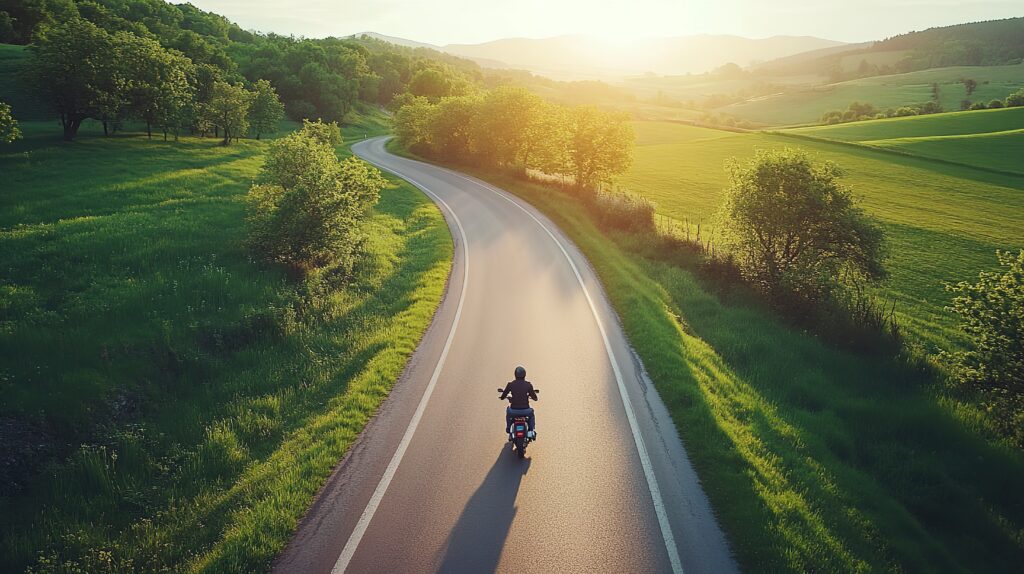
This is why the Department for Transport’s renewed focus on high-risk road users and high-risk environments is so important. The Safe System approach recognises that people will make mistakes, but the consequences of those mistakes should not be fatal. For motorcyclists on rural roads, that means a combination of better road design and maintenance, smarter enforcement, improved rider skills and a culture that prioritises shared responsibility.
Encouragingly, there are examples of this approach already making a difference. Scotland’s PRIME project (Perceptual Rider Information for Maximising Expertise) is a standout. By using innovative on-road markings to guide riders’ visual attention and improve cornering behaviour, PRIME supports better decision-making at exactly the point it matters most. It is a practical, evidence-informed intervention that respects rider autonomy while subtly reducing risk. That balance is key.
Technology also has a role to play. As someone working in this arena, I see first-hand how data-led approaches can help target the behaviours and locations that present the greatest risk. Speed remains a factor in many serious collisions, particularly on rural roads where limits can feel less constrained. Intelligent, proportionate enforcement helps reinforce safe speeds without detracting from the enjoyment of riding. It is not about restricting freedom; it is about preserving life.
Ultimately, though, the most important safety system sits between the rider’s ears. Responsibility cannot be outsourced. Each of us makes choices every time we ride, and those choices determine whether a great day out ends safely.
From my own experience, there are four simple principles I return to every time I head out:
- Ride within what you can see. Rural roads are full of hidden hazards, so your stopping distance must always match the distance you can clearly see ahead. If you cannot see through the bend, you cannot assume it is clear.
- Manage your positioning. Good road position buys you time and vision. It allows you to read the road earlier, spot hazards sooner, and be more visible to others. But it must always be appropriate to the environment – especially where oncoming traffic or junctions are involved.
- Expect the unexpected. Assume there will be something in the road: mud, diesel, livestock, a cyclist or a vehicle cutting a corner. This mindset changes how you approach every bend and every crest.
- Keep your ego in check! Riding in groups or on familiar routes can tempt us to push harder than we should. The best riders are not the fastest; they are the ones who arrive home safe, every time.
None of this diminishes the joy of motorcycling. In fact, it builds on it. Confidence built on skill, awareness and good anticipation makes for a far more rewarding ride than anything driven by risk.
As we move through the peak riding season, the message is simple. Enjoy the roads, embrace the scenery, but respect the risks. With the right combination of policy, infrastructure, enforcement and personal responsibility, we can ensure that more riders finish their journeys with nothing more than great memories of a day well spent. Because ultimately, that is what success looks like: every rider, every journey, home safe.